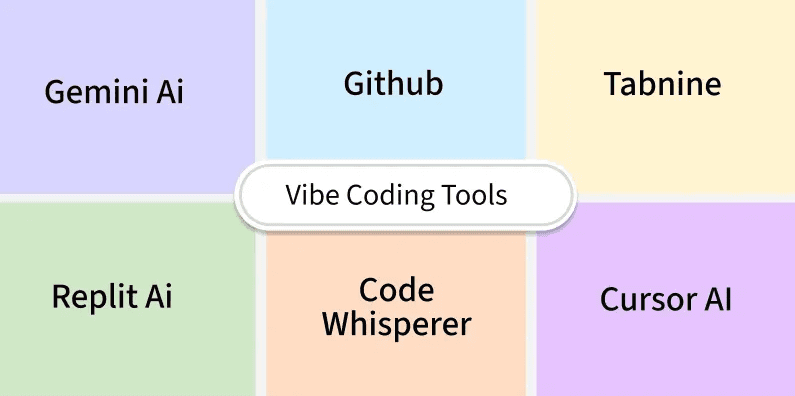
Vibe Coding vs Knowledgeable Developers: The AI Productivity Divide
The rise of AI-powered development tools has created an interesting phenomenon in our industry: the emergence of "vibe coding" — a development approach where programmers rely heavily on AI assistance without deep understanding of the underlying principles.
The Two Camps
Vibe Coders
These developers have embraced AI tools like GitHub Copilot, ChatGPT, and Claude as their primary development companions. They can produce working code quickly, often without fully understanding the intricacies of what they're building. Their workflow typically involves:
- Describing what they want in natural language
- Accepting AI-generated code with minimal review
- Iterating through AI suggestions until something works
- Limited debugging skills when AI suggestions fail
Knowledgeable Developers
On the other side, we have developers who combine AI assistance with deep technical knowledge. They understand:
- Fundamental programming concepts and design patterns
- System architecture and performance implications
- Security considerations and best practices
- How to debug and optimize code effectively
The Productivity Paradox
Here's where it gets interesting: in many scenarios, vibe coders can appear more productive in the short term. They can:
- Prototype features rapidly
- Generate boilerplate code quickly
- Explore multiple approaches without getting stuck on implementation details
However, this apparent productivity advantage often crumbles when:
- Complex debugging is required
- Performance optimization becomes critical
- Security vulnerabilities need to be addressed
- System architecture decisions impact scalability
What the Data Actually Shows
Enough theory. Here is the irrefutable evidence that makes the case for human-AI partnership clearer than any opinion ever could.
For the Vibe Coders: AI Writes Code Faster — But Not Safer
The productivity gains are real and documented. A controlled GitHub study found developers completed tasks 55.8% faster with Copilot than without (GitHub Research, 2023 — statistically significant at p=.0017). Those speed gains are genuine.
But here is what the speed studies do not tell you.
A comprehensive analysis from Georgetown's Center for Security and Emerging Technology (November 2024) found that at least 62% of AI-generated programs contain security vulnerabilities. Cross-site scripting failures appear in 86% of AI-generated code samples. Log injection vulnerabilities appear in 88%. While AI has reduced trivial syntax errors by 76%, privilege escalation vulnerabilities in AI-generated code have jumped 322% and architectural design flaws have spiked 153%.
This is not fine print. This is what happens when the person directing the AI does not understand security fundamentals well enough to review the output. Speed without judgment is not productivity — it is technical debt with a fast clock.
Even the Stack Overflow 2024 Developer Survey found that 45% of developers believe AI tools fail on complex tasks, and 31% remain skeptical about AI providing accurate solutions. The developers saying that? They are the ones who have been burned by it.
For the Dismissive Programmers: This Is Not a Fad
If you are in the camp that believes AI coding tools are glorified autocomplete that will blow over — the data has moved on without you.
The 2024 Stack Overflow Developer Survey found that 76% of developers are using or planning to use AI tools, up from 70% the prior year. That is not a fad curve — it is an adoption curve with no sign of reversing.
Google DeepMind's AlphaCode 2 (December 2023) now ranks at the 85th percentile of human competitors on competitive programming platforms. McKinsey estimates generative AI will add $2.6 to $4.4 trillion annually to the global economy, with software engineering capturing a dominant share of that value.
The question is no longer whether AI changes software development. It already has. The question is whether you are positioned to benefit from it or be left behind by it.
For the Developers Who Fear Replacement: Read This Carefully
The Bureau of Labor Statistics projects software developer employment to grow 25% from 2022 to 2032 — approximately 410,000 new positions — making it one of the fastest-growing occupations in the economy. This projection was made in full awareness of AI tools.
Developers with AI skills are commanding a 25% salary premium over peers in equivalent roles without them (PwC, 2025). Specialized AI engineering roles are seeing starting salaries of $180,000 to $350,000.
Now here is the finding that cuts through all the noise: a 2025 METR study testing experienced open-source developers found that those using early-2025 AI tools took 19% longer to complete complex tasks in well-understood codebases. Not because AI is useless — because deep experts on familiar territory spend more time directing and reviewing than being rescued. Their expertise means there is less low-hanging fruit for AI to grab.
This is the paradox that reveals everything: AI provides the biggest gains to people doing unfamiliar work. The deeper your expertise, the more you are directing the AI rather than depending on it. Senior developers report 32% of their shipped code is AI-generated — not because they are lazy, but because they understand their domain well enough to delegate safely and review confidently.
AI cannot replace what it does not understand. And it does not understand your business logic, your architectural constraints, your users, or the long-term consequences of the decisions it makes. That understanding lives in you.
The Real Divide
The true divide isn't between those who use AI and those who don't — it's between those who use AI as a powerful tool to amplify their existing knowledge and those who use it as a replacement for fundamental understanding.
Finding Balance
The most effective developers in the AI era will be those who:
- Embrace AI tools while maintaining strong fundamentals
- Use AI for acceleration, not as a crutch
- Understand when to trust AI and when to rely on their own expertise
- Continuously learn both AI capabilities and core programming concepts
Conclusion
AI is not going away, and neither is the need for skilled developers who understand their craft. The future belongs to those who can harness AI's power while maintaining the deep knowledge necessary to build robust, scalable, and secure systems.
The question isn't whether to use AI in development — it's how to use it responsibly while continuing to grow as a knowledgeable developer.